Choosing the best E Folding Scooter requires more than comparing prices or glossy photographs. It means matching the scooter to your daily routes, storage space, body size, and travel habits. A practical choice should fold smoothly, fit inside your vehicle, and remain stable on uneven pavement. Weight matters. Check the folded dimensions carefully. A model that looks compact online may feel awkward beside a car seat.
Real-world experience often reveals details that specifications hide. Lift the scooter before buying, if possible, and test the folding latch several times. Examine the handlebar height, seat support, braking response, tire design, and turning radius. Battery range should cover your normal journey with reserve power for hills, cold weather, and unexpected delays. Manufacturer manuals provide essential limits, while independent reviews can reveal comfort problems after longer rides. I once underestimated carrying weight, and that mistake made short trips unnecessarily difficult. The advertised range can also feel optimistic.
Reliable guidance should consider safety, service, and long-term ownership. Look for clear warranty terms, accessible replacement parts, responsive customer support, and charging instructions from the manufacturer. Confirm that the scooter suits local transport and accessibility requirements before using it in public areas. A qualified dealer can check posture, controls, and fit more accurately than a quick online purchase. No single model is perfect. The best E Folding Scooter is the one you can control confidently, store safely, and use consistently without exhausting yourself. Evaluate your real routine, not an idealized one.
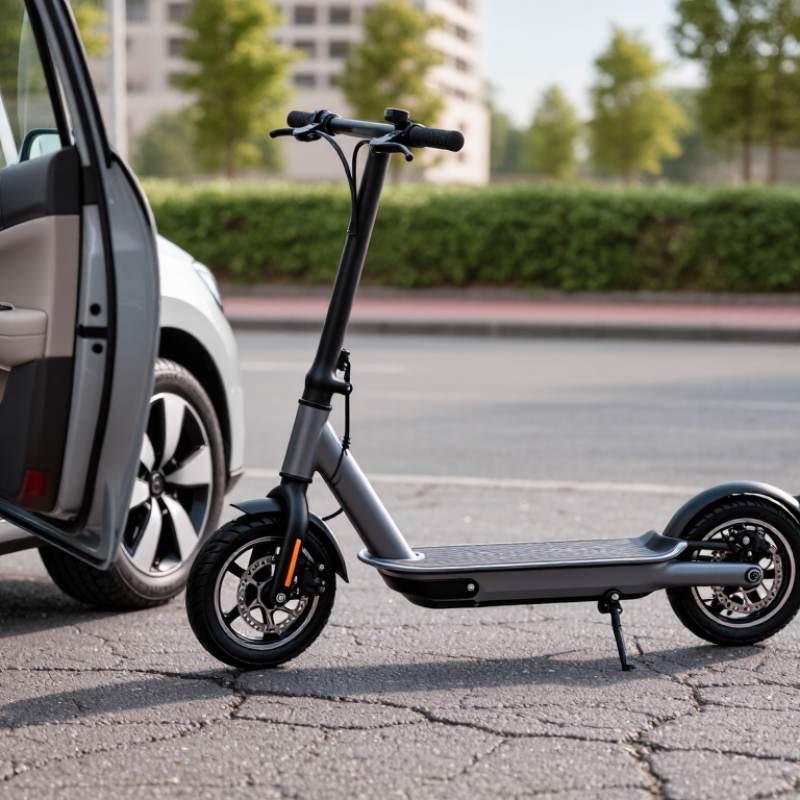
An e-folding scooter is a battery-powered scooter designed to collapse for storage and transport. Most models use a lithium-ion battery, a hub motor, a controller, and electronic brakes. The battery sends direct current to the controller. The controller regulates power to the motor after you twist a throttle or press an accelerator. The motor then turns the wheel and creates forward motion.
The folding system usually works through a locking hinge near the steering column. A secure latch matters more than a clever shape. Loose hinges can cause unwanted movement on uneven pavement. Practical testing should include lifting the scooter, folding it beside a car, and checking whether the latch closes fully. Many scooters use regenerative braking, but it rarely replaces mechanical braking completely. That detail is easy to overlook.
The International Energy Agency’s Global EV Outlook 2024 identifies electric two- and three-wheelers as the most electrified road-transport segment. It also reports that average battery-pack prices fell by 14% in 2023, although retail prices do not always fall equally. The World Health Organization’s Global Status Report on Road Safety 2023 records about 1.19 million annual road deaths worldwide. Therefore, choosing a scooter is not only about range. Check tire size, lighting, brake response, rider weight limits, and real charging time. Manufacturer range figures often use ideal conditions. Cold weather, hills, heavier loads, and frequent stops can reduce them noticeably.
Motor power matters most when the route includes hills or frequent starts. Compare sustained output, not just peak power, because peak figures may last only briefly. On a test ride, notice whether acceleration feels steady with a backpack onboard. A scooter that feels quick on flat pavement may slow sharply on a slope. That difference matters.
Battery capacity gives a useful starting point, but advertised range is not a promise. Rider weight, cold weather, tire pressure, and repeated climbs all affect distance. Compare range estimates under similar conditions, then leave a practical buffer for the return trip. A larger battery can add weight, too. Trade-offs are real.
Braking and tires deserve the same attention as speed. Check whether the brakes feel controlled during a firm stop, and look for tires suited to your usual pavement. Small wheels can feel lively, but cracks and rough seams may transmit more vibration. Folding hardware is part of performance as well: test the latch, carry the folded scooter a short distance, and check for unwanted movement. I would not judge it from a specification sheet alone; a brief ride can reveal a rattle or awkward balance that numbers miss.
The right size begins with your daily route, not the product photograph. Measure your doorway, elevator, storage corner, and vehicle trunk before comparing models. A scooter that fits through a 32-inch doorway may still feel awkward in a narrow kitchen. Check the folded height and width carefully. Manufacturer measurements can exclude mirrors, baskets, or loose cables.
Weight matters most when lifting becomes part of your routine. I once chose a lighter scooter with a small seat, then regretted it after longer outdoor trips. Aim for a weight you can lift safely, even when tired. Many users prefer a model under 35 pounds, but personal strength and folding balance matter more than a single number. Test the folded grip. It should not press sharply into your palm.
Portability also depends on how quickly the scooter becomes manageable. A reliable folding mechanism should move smoothly without sudden drops or trapped fingers. Try folding it beside a car, then roll it across a pavement edge. Small wheels may feel easy indoors but struggle on rough sidewalks. Ask about battery removal, charging access, and airline or local transport rules before buying. These details are easy to overlook. A brief showroom test can mislead you, because real travel includes ramps, shopping bags, and uneven ground.
Choosing an e-folding scooter should begin with safety, not appearance. The World Health Organization’s Global Report on Health Equity for Persons with Disabilities estimates that 1.3 billion people experience significant disability worldwide. That figure shows why accessibility cannot be treated as a minor extra. Look for responsive electromagnetic brakes, anti-tip wheels, bright front and rear lights, reflectors, and a horn that is easy to reach. The scooter should remain stable on ramps and uneven pavements. A quick showroom spin is useful, but it cannot replace testing the actual routes used at home.
Comfort affects safe control. Choose an adjustable tiller, supportive backrest, and a seat that does not press against your hips. Check whether the controls remain visible in bright sunlight. A battery indicator should be simple and readable. The U.S. Consumer Product Safety Commission has repeatedly highlighted fall and tip-over risks across mobility products, so examine wheel placement and ground clearance carefully. Small wheels may fold neatly, yet they can struggle with door thresholds or broken sidewalks. Lightweight is not always safer.
Accessibility also includes transport. Confirm the folded scooter fits your car, elevator, and storage space without awkward lifting. The folding latch should lock audibly and release without excessive force. The CDC reports that more than one in four adults aged 65 and older falls each year, although not every fall involves mobility equipment. That statistic deserves humility: even a well-designed scooter cannot correct rushed turns, poor lighting, or unsuitable surfaces. If possible, test it with the shoes, bag, and cushion you normally use. Personal fit matters more than a perfect specification sheet.
| Category | Feature to Assess | What to Check | Practical Selection Guide | Priority |
|---|---|---|---|---|
| Safety | Braking system | Identify the brake types, how they are operated, and whether braking remains predictable at different speeds. | Look for responsive brakes and test them in a safe, open area before regular use. Allow extra stopping distance on wet or loose surfaces. | Essential |
| Safety | Lights and visibility | Check for a front light, rear light, reflectors, and visibility from the sides. Confirm that lights are easy to switch on. | Choose equipment that helps other road users see you, especially in low light. Follow local rules for riding after dark. | Essential |
| Safety | Folding mechanism and latch | Inspect the locking parts for a clear, secure engagement and check for movement or looseness when the scooter is unfolded. | Practice folding and unfolding before riding. Do not ride if the mechanism does not lock fully or appears damaged. | Essential |
| Safety | Battery and electrical safety | Review the battery documentation, charger instructions, warranty, and any applicable independent safety certification. | Use only the supplied or manufacturer-approved charger. Charge and store the battery according to the instructions and local fire-safety guidance. | Essential |
| Safety | Load rating and stability | Check the stated maximum load and assess handlebar, deck, and frame stability during a careful test ride. | Stay within the rated load, including carried items. A stable stance and predictable steering matter more than top speed. | Essential |
| Comfort | Tires and ride quality | Compare pneumatic and solid tires, tire size, and whether suspension is fitted. | Pneumatic tires can cushion bumps but may need inflation and can puncture. Solid tires reduce puncture concerns but may transmit more vibration. | High |
| Comfort | Handlebar and deck ergonomics | Check handlebar height and grip, deck width, foot placement, and whether the riding posture feels natural. | Test the scooter in the footwear you normally wear. Make sure you can steer and stand comfortably without stretching or crowding your feet. | High |
| Comfort | Range and charging | Compare the stated range with independent real-world testing, battery capacity, charging time, and battery replacement options. | Actual range varies with rider load, hills, temperature, speed, tire pressure, and battery age. Choose enough tested range for your route with a reserve. | High |
| Accessibility | Folded weight and carrying points | Check the total weight, folded dimensions, balance when lifted, and whether the frame has a safe, convenient carry point. | If you need to lift it onto public transport or into a car, try lifting the folded scooter before buying; listed weight alone does not show how easy it is to handle. | High |
| Accessibility | Folding effort and storage | Assess whether the latch can be operated comfortably and whether the folded scooter fits your storage space or travel routine. | Practice the complete folding process. Consider hand strength, balance, and whether you can manage the scooter without assistance. | High |
| Accessibility | Controls and display | Check that the throttle, brake controls, power button, and display are easy to reach, understand, and operate. | Prefer clearly labeled controls and a display that remains readable in your usual riding conditions. Try them while wearing gloves if needed. | High |
| Accessibility | Terrain and route suitability | Review ground clearance, wheel size, hill performance, and the route’s curb cuts, surface quality, and gradients. | Match the scooter to your actual route. Check local regulations and confirm that the scooter is permitted on the paths or roads you plan to use. | High |
Note: Specifications, road rules, and accessibility needs vary. Verify current local requirements and test the scooter in a safe setting before relying on it for daily travel.
Choosing the best E-folding scooter requires more than comparing advertised range. Battery performance depends on rider weight, hills, temperature, tire pressure, and travel speed. During a practical test, measure distance on your usual route, not only on flat showroom floors. Leave a reserve for unexpected delays.
A useful battery should provide steady power without sudden drops. Check charging time, battery replacement cost, and the manufacturer’s testing conditions. Some batteries lose capacity after repeated charging, especially in extreme temperatures. I once trusted a maximum-range figure and underestimated a steep return journey. That mistake changed how I evaluate scooters.
Maintenance also affects long-term value. Inspect the folding joints, brakes, tires, cables, and charger before buying. The mechanism should lock firmly and operate without unusual noise. Ask whether replacement parts and qualified service are available locally. Small issues become expensive when repairs require shipping the entire scooter. Keep a simple maintenance record, including tire pressure and charging habits.
Value means more than a low purchase price. Compare the scooter’s useful range, carrying weight, warranty coverage, repair access, and expected battery life. A lighter model may fit a car trunk but feel less stable on uneven pavement. A stronger frame may improve comfort while adding weight. Read independent user feedback carefully, but treat every review as personal experience, not proof. Your route, storage space, and daily lifting ability matter most.
Compare sustained motor output, not only peak power. Test acceleration with a backpack onboard. Hills reveal weaknesses quickly. A scooter may feel fast on flat pavement but slow sharply uphill.
Treat it as an estimate, not a promise. Rider weight, cold weather, tire pressure, and repeated climbs reduce distance. Leave enough battery for the return trip. A larger battery also adds weight.
Try a firm stop in a safe area. Braking should feel controlled, not sudden or weak. Check tire grip on your usual pavement. Slow turns matter too.
Small wheels fold neatly and can feel lively. They may struggle with cracks, door thresholds, and broken pavement. You might need to reduce speed often. That trade-off is easy to underestimate.
Look for responsive brakes, anti-tip wheels, bright lights, reflectors, and an accessible horn. Check stability on ramps and uneven surfaces. Safety is not decorative.
Choose an adjustable tiller, supportive backrest, and a seat that does not press your hips. Confirm the controls remain visible in bright sunlight. Test the scooter with your normal shoes and bag.
Check whether the battery display is simple and readable. Test the folding latch several times. It should lock audibly and release without excessive force. A short showroom ride may miss important problems.
Measure your car space, elevator, and storage area first. Carry the folded scooter briefly, if possible. Notice awkward lifting, rattling, or poor balance. Lightweight is not always safer. I may judge this too quickly.
Choosing the best E Folding Scooter starts with understanding how it combines a compact folding design, electric motor, rechargeable battery, and user controls to support convenient daily mobility. Compare key performance features such as motor power, maximum speed, turning ability, braking response, climbing capacity, and ride stability. The ideal model should match your usual routes, whether they include indoor spaces, sidewalks, or gentle slopes.
Size, total weight, folded dimensions, and carrying methods are equally important, especially for storage and transportation. Look for practical safety and comfort features, including reliable brakes, bright lighting, secure steering, adjustable controls, a supportive seat, and a comfortable suspension system. Accessibility should also be considered, including easy entry, simple operation, and sufficient legroom. Finally, evaluate the battery’s real-world range, charging time, replacement options, maintenance requirements, warranty coverage, and overall cost. A thoughtful comparison will help you select an E Folding Scooter that offers dependable performance, convenient portability, comfort, and lasting value.

Aiweda