How to Choose the Best Foldable Ebike for Global Sourcing?

Time:2026-10-21 Author:Aria
0%

Choosing the right Foldable Ebike for global sourcing requires more than comparing prices and frame colors. Buyers must examine battery safety, motor performance, folding strength, supplier capability, and after-sales support. A compact model may look attractive in a catalog, yet its hinge can loosen after repeated folding. Real evaluation begins with evidence.

Experienced sourcing teams request test reports, factory photographs, production samples, and clear component specifications. They check battery capacity under realistic riding conditions, not only laboratory claims. A 250-watt motor may suit urban commuting, while heavier riders or steep routes may require different specifications. Weight also matters. A bike that folds neatly but weighs 29 kilograms may be difficult to carry onto trains or upstairs.

Supplier verification is equally important. Visit the factory when practical, or arrange an independent inspection before shipment. Review quality-control procedures, warranty terms, spare-parts availability, packaging strength, and communication speed. Ask how the supplier handles defective batteries or damaged hinges. Small details matter.

Global sourcing also requires careful review of destination-market rules, labeling, charger standards, transport requirements, and responsible battery handling. Requirements vary by country and can change. Confirm them with qualified local professionals before placing a large order. Do not rely on copied certificates or vague promises. That mistake is expensive.

This guide explains how to compare Foldable Ebike suppliers with practical criteria and measurable checks. It also recognizes an uncomfortable truth: no sourcing plan is perfect. Testing reduces risk, but it never removes uncertainty. Good decisions come from documented evidence, realistic expectations, and continuous review.
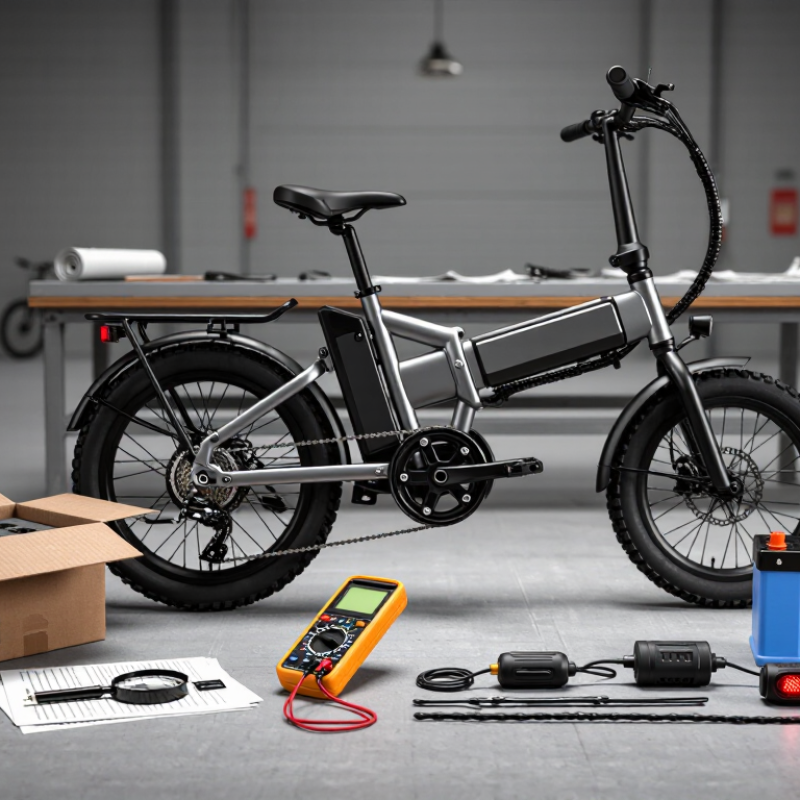
How to Choose the Best Foldable Ebike for Global Sourcing?

Define Sourcing Goals and Foldable Ebike Use Cases

Global sourcing should begin with a clear use case, not a catalogue search. The IEA’s Global EV Outlook 2024 identifies electric two- and three-wheelers as the largest electric road-vehicle segment by sales. Meanwhile, the European Bicycle Industry and Market Profile 2024 reported more than five million e-bikes sold in Europe during 2023. Demand is real, but it is not uniform.

Start with the route. A commuter may need a compact frame, reliable lights, and easy storage beside a desk. A camper may value a smaller folded footprint and a removable battery. A delivery user needs stronger wheels, higher payload capacity, and accessible service parts. Details matter. Record the rider weight, daily distance, hills, climate, transport method, and storage dimensions before contacting suppliers. Then define measurable targets: folded size, net weight, motor output, range under realistic load, charging time, warranty response, and minimum order quantity. Battery certification and transport documentation must match the destination market.

One sourcing mistake is treating “long range” as a universal requirement. It often increases weight and cost unnecessarily. A 25-kilometre urban route may need a different battery than a 70-kilometre recreational route. Request tested range data, not promotional estimates. Ask for samples, inspection records, spare-parts lists, and failure-rate evidence. The first specification may still be wrong. Test it with real users before scaling.

Compare Motor, Battery, Range, and Riding Performance

Choosing the best foldable ebike for global sourcing starts with a careful motor comparison. Rated power matters, but torque often explains real climbing ability. A 250W motor may feel weak on steep streets if the controller limits current. Ask suppliers for rated output, peak output, torque, controller settings, and hill-test results. I prefer reviewing physical samples, because specifications can hide slow acceleration or excessive motor noise.

Battery capacity should be measured in watt-hours, calculated by multiplying voltage by amp-hours. A 36V, 10Ah battery stores about 360Wh. This figure supports clearer cost and range comparisons. However, advertised range can disappoint. Rider weight, tire pressure, temperature, hills, and assist level change consumption quickly. Request test data at different assist levels, not only one optimistic distance. Check cell documentation, charging time, connector quality, and battery protection features.

Riding performance is more than speed. Test folding stability, hinge alignment, brake control, steering response, and frame vibration. On a sample ride, I look for wobbling after repeated folding and unfolding. Small wheels can feel nervous on broken pavement. That detail is easy to miss. Range claims are never perfectly repeatable. A sourcing decision should include inspection records, spare-part availability, packaging tests, and consistent production samples. A lower-cost motor may seem attractive, yet poor throttle response can create returns and customer complaints. Perfect specifications do not guarantee a satisfying ride.

Evaluate Folding Design, Frame Quality, and Component Safety

How to Choose the Best Foldable Ebike for Global Sourcing?

Evaluate Folding Design, Frame Quality, and Component Safety

When sourcing a foldable ebike, inspect the folding system beyond its appearance. A compact hinge should close smoothly without side-to-side movement. Ask suppliers about hinge materials, locking pins, and service intervals. Try folding the sample repeatedly. Do not trust a single demonstration.

Frame quality affects safety, durability, and shipping returns. Inspect welds around the hinge, battery mount, and rear triangle. Look for uneven beads, sharp edges, or hidden cracks. A lightweight frame is useful, but excessive thinness may reduce stiffness. Request fatigue-test records and production inspection reports. Still, test data needs careful verification.

Component safety requires practical checks. Confirm that brake cut-off sensors respond consistently during repeated use. Examine the battery enclosure for secure mounting, impact protection, and clean wiring. The charger should match the battery specifications and include clear identification labels. Ask for documented checks covering electrical insulation, overheating, and charging performance. Requirements vary across target markets, so reliable suppliers should provide current compliance documents and traceable test results.

One detail is easy to miss: cables can pinch during folding. No design is perfect. A loose cable today may become a failure later. Sample testing should include uneven pavement, repeated folding, and loaded riding. These findings may challenge the original specification, but that is valuable. Better sourcing decisions often begin with uncomfortable questions.

Check Supplier Capability, Certifications, Pricing, and Minimum Orders

Choosing the best foldable ebike for global sourcing starts with the supplier, not the catalog. A polished catalog proves little. Ask about monthly capacity, folding mechanisms, battery sourcing, quality controls, and after-sales support. Request production photos, sample records, and traceable test reports. A factory should explain its process clearly. Vague answers deserve caution.

Certifications must match the destination market and product configuration. Check reports for the exact battery, charger, motor, and frame version. Confirm document validity with the issuing laboratory when possible. Also review battery transport documents and packaging requirements. I once trusted an outdated test file, which delayed a sample shipment. That mistake showed me an important lesson: documents need regular verification.

Compare pricing through landed cost, not unit price alone. Include tooling, packaging, inspection, freight, duties, spare parts, and payment terms. Ask for a written quotation with clear specifications. Minimum order quantities can expose hidden pressure. A low MOQ may raise the unit price, while a high MOQ can trap cash in unsold stock. Negotiate a pilot order with measurable quality criteria. Keep one approved sample for comparison. Suppliers sometimes promise flexibility, then change terms later. Record every agreement. Your sourcing decision should balance capability, compliance, cost, and practical risk.

Plan Sampling, Quality Control, Shipping, and After-Sales Support

How to Choose the Best Foldable Ebike for Global Sourcing?

Global sourcing starts with a controlled sample, not a polished catalog image. Request two or three units from the same production specification. Record folding dimensions, frame weight, motor output, battery capacity, and charging time. Test the hinge after repeated folding cycles. Check cable routing and locking points closely. Small noises matter.

A practical quality-control plan should match real riding conditions. Inspect welds, paint coverage, brake alignment, tire pressure, and display accuracy. Test battery performance in both warm and cool environments. Ask for serial-number tracking and inspection photographs before shipment. An independent inspection can catch loose connectors or missing hardware. Our early samples once passed basic checks but developed hinge noise. The checklist needed revision.

Shipping requires careful protection. Use reinforced cartons, moisture barriers, molded inserts, and clear handling labels. Confirm the battery classification and transport documents with qualified logistics providers. Never rely on assumptions about destination rules. Prepare spare hinges, chargers, brake pads, and fasteners for after-sales support. Provide repair instructions with photographs and response-time targets. Keep a digital record of complaints, replacement parts, and corrective actions. This system is useful, although it can feel slow during urgent launches.

FAQS

What should I inspect in a foldable ebike’s folding system?

Check whether the hinge closes smoothly without side-to-side movement. Inspect locking pins, hinge materials, and service intervals. Fold the sample repeatedly. One demonstration is not enough.

How can I evaluate frame quality before placing an order?

Inspect welds near the hinge, battery mount, and rear triangle. Look for sharp edges, uneven beads, or hidden cracks. Request fatigue-test records and production inspection reports. Test data still needs verification.

Which component safety checks matter most?

Test brake cut-off sensors during repeated use. Check secure battery mounting, impact protection, and clean wiring. Confirm that the charger matches the battery specifications. Ask for insulation, overheating, and charging-performance records.

Can folding damage cables or connectors?

Yes, cables can pinch near hinges and locking points. Inspect routing during repeated folding. Test the bike on uneven pavement and under load. A loose cable today may become tomorrow’s failure.

How should I assess a supplier beyond its catalog?

Ask about monthly capacity, battery sourcing, quality controls, and after-sales support. Request production photos, sample records, and traceable test reports. Vague answers deserve caution. A polished catalog proves little.

How can I verify compliance documents for different markets?

Match documents to the exact battery, charger, motor, and frame version. Check validity with the issuing laboratory when possible. Review battery transport documents and packaging requirements. Old files can delay shipments.

What costs should I include when comparing supplier quotations?

Compare landed cost, not unit price alone. Include tooling, packaging, inspection, freight, duties, spare parts, and payment terms. A low minimum order may increase unit cost. A high one can trap cash.

What should a controlled sample and quality plan include?

Request two or three units from one production specification. Record folding dimensions, frame weight, motor output, battery capacity, and charging time. Inspect brakes, welds, paint, tires, and displays. Small noises matter.

How can I prepare shipping and after-sales support?

Use reinforced cartons, moisture barriers, molded inserts, and handling labels. Confirm battery transport details with qualified logistics providers. Keep spare hinges, chargers, brake pads, and fasteners. Store complaints and corrective actions digitally. The process feels slow, but weak records create bigger problems.

Conclusion

Choosing the best Foldable Ebike for global sourcing starts with clearly defining your target users, riding environments, required range, portability needs, and expected price level. Compare motor power, battery capacity, charging time, real-world range, hill-climbing ability, braking performance, and overall ride comfort. The folding mechanism should be convenient, secure, and durable, while the frame, hinges, wheels, tires, and electrical components must meet appropriate safety and quality expectations.

A reliable sourcing process also requires careful supplier evaluation. Review manufacturing experience, production capacity, quality systems, certifications, customization options, pricing, lead times, and minimum order quantities. Before placing a large order, arrange samples and test them for folding strength, battery performance, water resistance, braking, stability, and long-term use. Establish inspection standards, packaging requirements, shipping plans, spare-parts availability, warranty terms, and after-sales support in advance. This structured approach helps buyers reduce risk, maintain consistent quality, and select a Foldable Ebike solution that fits both market demand and operational goals.


Aria

Aria

Aria is a dedicated marketing professional with a deep passion for innovative strategies and a keen understanding of our company's product offerings. With a wealth of experience in the industry, Aria excels at crafting engaging content that highlights the unique features and benefits of our......