Choosing an Electric Cargo Trike in 2026 is no longer a simple motor-and-battery decision. Buyers now compare payload ratings, stability, range, braking systems, weather protection, and long-term service support. A trike carrying children, groceries, or commercial equipment must feel predictable on narrow streets and uneven paths.
Claus Fleischer, CEO of Bosch eBike Systems, has described cargo bikes as “the SUVs of the future.” His comparison highlights their practical role, but it also deserves careful thought. An Electric Cargo Trike is not automatically safer, stronger, or more efficient because it has three wheels. Frame design, steering geometry, tire quality, and weight distribution matter greatly.
Real-world testing should come before attractive specifications. Place a realistic load in the box. Try a tight turn. Test the parking brake on a slope. Listen for unusual motor noise. Small details become important after several daily deliveries. A powerful motor may help on hills, yet it can increase battery use and replacement costs. A large battery may extend range, but it also adds weight.
The right model depends on your routine, not only your budget. Consider door width, storage space, charging access, and local repair availability. Some choices will still involve compromise. That is normal.
This guide examines the essential questions behind a dependable Electric Cargo Trike purchase. It focuses on practical experience, measurable specifications, and honest ownership concerns. Because the best choice is rarely the most expensive one.
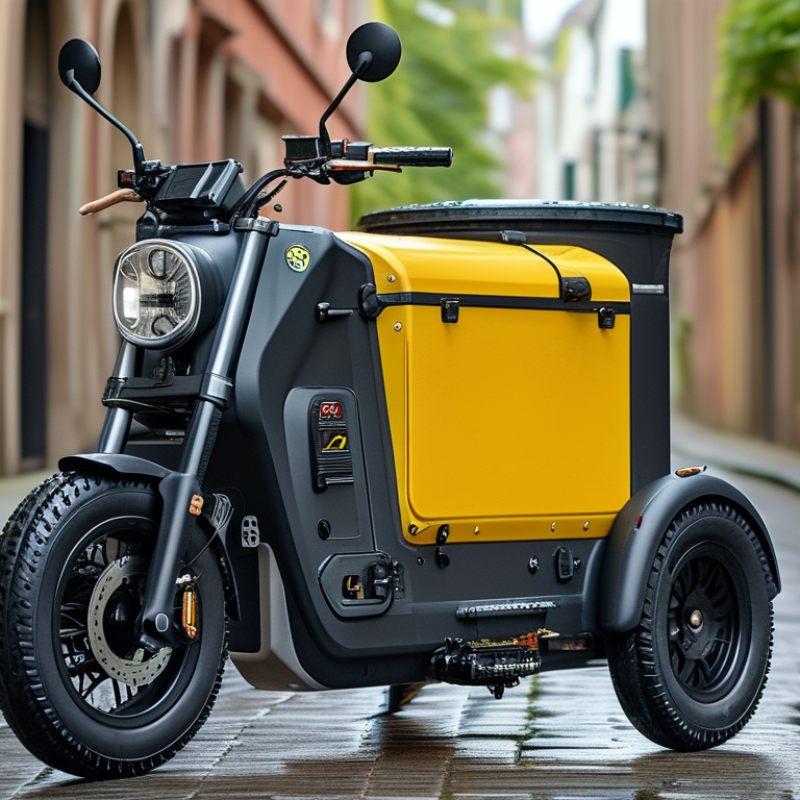
Choosing an electric cargo trike starts with a practical question: what must it transport every day? List the load, dimensions, distance, road surface, and delivery frequency. A family may need two child seats and weather protection. A tradesperson may need a flatbed, lockable box, and space for tools.
The University of Westminster’s Active Travel Academy found cargo bikes can be up to 60% faster than vans on some dense urban routes. This matters when stops are frequent and parking is difficult. However, speed is not enough. A 150-kilogram payload can change braking distance, battery use, and hill performance. Check the rated payload, including the rider and accessories. Many buyers forget this detail. I have seen “large capacity” designs struggle on steep streets when fully loaded.
Tips: Measure your usual cargo before shopping. Test the trike with weight inside. Check turning width, ramp access, battery charging time, and storage security. The European Cyclists’ Federation identifies short urban deliveries as a strong use case for cargo cycles, but route conditions still decide suitability. A model that works on smooth streets may feel unstable on gravel or broken pavement. Do not trust a single test ride. Repeat it with a realistic load, because empty performance can be misleading.
Use this planning table to match your daily transport needs with the appropriate electric cargo trike configuration. Values are typical ranges for current utility models and should be verified against local road regulations and the final vehicle specification.
| Transport Requirement | Key Question | Typical Planning Data | Recommended Configuration | Priority | Why It Matters |
|---|---|---|---|---|---|
| Primary cargo type | What will the trike carry most often? | Parcel boxes, groceries, tools, plants, food containers, or temperature-sensitive goods | Choose an open platform for bulky loads, a box body for weather protection, or an insulated compartment for chilled products | High | The cargo type determines the body design, tie-down points, access method, and protection required during transport. |
| Payload capacity | What is the maximum combined weight of cargo and accessories? | Light urban delivery: 80–150 kg; heavy-duty utility work: 150–300 kg or more | Select a rated payload at least 15–20% above the heaviest planned load | High | Operating near the maximum rating can reduce braking performance, range, tire life, and component durability. |
| Cargo volume and dimensions | What are the largest items and how much space do they occupy? | Common cargo boxes provide approximately 0.5–1.5 m³ of usable volume | Measure the longest, widest, and tallest regular items before selecting the cargo bed or box | High | Weight alone is not enough; oversized or awkwardly shaped goods may require a longer platform or taller enclosure. |
| Daily travel distance | How far will the trike travel between charging opportunities? | Short routes: under 25 km/day; regular routes: 25–60 km/day; intensive routes: over 60 km/day | Choose a battery with practical range at least 25% greater than the planned daily route | High | Real-world range decreases with heavy loads, hills, cold weather, frequent stops, and high assist levels. |
| Operating terrain | Will the route include hills, gravel, uneven pavement, or private roads? | Flat urban streets generally require less power than routes with sustained gradients of 8–15% | Use a higher-torque motor, low gearing, hydraulic brakes, and wider tires for hills or rough surfaces | High | Terrain affects motor temperature, climbing ability, energy consumption, braking distance, and rider control. |
| Speed requirement | What travel speed is appropriate for the route and local rules? | Many pedal-assist cycles are designed around 25 km/h; some regulated categories allow higher speeds | Match the assistance category to local regulations, cycle-lane access, road conditions, and delivery deadlines | High | Higher permitted speeds may require additional equipment, registration, insurance, or restrictions on where the trike can operate. |
| Vehicle width and access | Can the trike pass through gates, cycle paths, loading areas, and storage doors? | Compact models are often about 0.8–1.0 m wide; larger models may exceed 1.1 m | Measure the narrowest access point and allow at least 5–10 cm of clearance on each side | High | A vehicle that cannot access the delivery point may require extra handling, reducing efficiency and increasing labor time. |
| Turning and maneuverability | How tight are the streets, courtyards, loading bays, and indoor areas? | Typical turning circles range from approximately 3.5–6.0 m, depending on wheelbase and steering design | Prioritize a compact wheelbase, stable steering, and a low center of gravity for dense urban routes | Medium | Good maneuverability reduces reversing, improves safety near pedestrians, and speeds up repeated deliveries. |
| Battery and charging | Where and how often can the battery be charged? | Common battery capacities are approximately 500–1,000 Wh; full charging often takes 4–8 hours | Choose a removable battery where charging occurs indoors, or a larger fixed system for depot-based operation | High | Charging access determines route availability, fleet scheduling, battery security, and the need for spare batteries. |
| Weather protection | Will the cargo be exposed to rain, snow, heat, dust, or direct sunlight? | Open beds provide limited protection; enclosed bodies can protect cargo from precipitation and contamination | Specify a waterproof cover, lockable enclosure, drainage, ventilation, or insulation according to the cargo | Medium | Weather protection helps prevent product damage, delivery delays, and additional packaging costs. |
| Loading and unloading frequency | How many stops and loading cycles occur during a typical shift? | High-frequency delivery work may involve 30–100 or more stops per day | Use low loading height, rear or side access, adjustable partitions, and clearly organized storage | High | Fast access and organized cargo placement reduce handling time and physical strain on the operator. |
| Safety and stability | How will the trike remain stable under uneven or shifting loads? | Keep heavy items low, centered, and secured; avoid exceeding the manufacturer’s axle or payload limits | Select reliable brakes, reflective equipment, lights, parking support, and a stable frame design | High | Correct load distribution improves cornering, stopping, hill starts, and overall rider confidence. |
| Operating hours | Will the trike be used during early mornings, evenings, or low-light conditions? | Frequent low-light use requires consistent front and rear visibility equipment | Specify integrated lights, reflectors, brake lights where applicable, indicators if required, and high-visibility markings | Medium | Visibility equipment supports safer interaction with motorists, cyclists, pedestrians, and loading-area staff. |
| Storage and security | Where will the vehicle and cargo remain when not in use? | Storage may require a covered area, secure anchor point, weather protection, and sufficient turning clearance | Consider a lockable cargo compartment, wheel lock, removable battery, alarm, and secure indoor parking | Medium | Proper storage reduces theft risk, weather-related wear, and unauthorized access to delivered goods. |
| Maintenance capability | Can tires, brakes, drivetrain, and electrical components be serviced locally? | Regular checks commonly include tire pressure, brake wear, chain or belt condition, fasteners, and battery health | Choose standard serviceable components and confirm access to replacement parts and qualified technicians | Medium | Serviceability affects vehicle uptime, total operating cost, and the ability to keep delivery schedules. |
| Regulatory compliance | What rules apply in the intended operating area? | Requirements may cover maximum width, motor power, assisted speed, lighting, brakes, insurance, and registration | Confirm national and local regulations before purchase, especially for public roads, cycle paths, and commercial use | High | A legally compliant configuration prevents access restrictions, fines, operational interruptions, and insurance problems. |
Planning note: Payload, range, speed, dimensions, and legal requirements vary by vehicle configuration and jurisdiction. Always verify the final specifications using the manufacturer’s technical documentation and the regulations applicable to your operating area.
: List your daily cargo, dimensions, weight, distance, and delivery frequency. Families may need two child seats and weather protection. Tradespeople may need a flatbed, lockable box, and tool space. Measure real items before shopping.
Check the rated payload, including the rider and accessories. A 150-kilogram load can increase braking distance and battery use. It can also reduce hill performance. Large capacity is not always practical.
Yes. Test it with realistic weight inside. Repeat slow turns and hill starts. An empty trike may feel excellent but perform poorly when loaded. That mistake is easy to make.
It suits short urban deliveries with frequent stops and limited parking. Some dense routes may be up to 60% faster than vans. Smooth streets are easier. Gravel and broken pavement require extra caution.
Look for strong hydraulic brakes, a parking brake, bright lights, and reflectors. Guarded wheels can protect nearby passengers. Child seats need secure restraints and foot protection. Certification helps, but it does not replace testing.
Place heavy items low and between the wheels. Test slow turns with the normal load. A wide track and low center of gravity may reduce leaning. Steep, uneven roads can still feel difficult.
Choose an adjustable handlebar and an easy step-through frame. Padded seating can reduce fatigue. Check vibration over rough pavement. Comfort is not merely luxury.
Look for a firm canopy, clear side panels, mudguards, and ventilation. Sealed electrical connections can reduce water-related problems. Test the controls with wet hands. Some covers trap heat.
Confirm secure restraints, protected feet, and enough room for movement. Children should see outside without blocking the rider’s view. Check the parking brake before loading them. Test at dusk and in light rain.
Choosing the right Electric Cargo Trike begins with understanding your main transport needs. Consider whether you will carry groceries, tools, parcels, children, or a combination of loads, and determine how often and how far you will ride. Compare cargo box or platform size, maximum payload, seating arrangements, and passenger options to ensure the trike fits your daily routine. Motor power should match your terrain and expected weight, while battery capacity and charging time should support your regular travel without unnecessary inconvenience.
Safety, stability, comfort, and weather protection are also essential. Look for dependable braking, balanced handling, adjustable seating, good visibility, protective covers, and practical lighting. Before purchasing, review maintenance requirements, replacement-part availability, warranty coverage, and the total cost of ownership, including charging and routine servicing. Finally, check the regulations that apply in your area, such as equipment, operating, and parking requirements. A careful comparison will help you select a reliable, comfortable, and practical cargo solution for long-term use.

 Aiweda